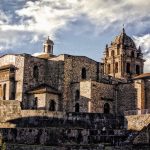

Explore Koricancha in Cusco, the ancient Inca Temple of the Sun. Learn about its history, its golden splendor, the impact of the conquest, and tips for visiting one of the most sacred sites of the Tawantinsuyu.

Koricancha: Cusco’s Golden Enclosure
In the heart of Cusco, between colonial streets and Inca walls that still defy the centuries, stands Koricancha, the most important temple of the Inca Empire. Its name comes from the Quechua words: quri (gold) and kancha (enclosure), which literally means “enclosure of gold.”
According to chronicles, its walls were covered with sheets of pure gold, which, when struck by the sun’s rays, illuminated the temple with a blinding glow. That brilliance was no mere luxury: for the Incas, gold represented the sweat of Inti, a sacred substance that had no economic value, but rather a spiritual one.
Today, although the plates have disappeared, Koricancha remains ablaze in the collective memory as the spiritual epicenter of Tawantinsuyu, the place where the sun and celestial gods were worshipped in ceremonies that united humanity with the cosmos.
The most sacred temple of Tawantinsuyu – The heart of the Andean world
Koricancha was much more than a temple: it was the spiritual and geographical axis of the empire. From within it ran the ceques, the sacred lines that connected Cusco with hundreds of wakas (sacred places), tutelary mountains, and temples in the four suyos.
In the Andean worldview, nothing was accidental. Koricancha was literally the spiritual navel of the Inca world, the point from which the universe was organized and maintained in balance.
The House of the Sun and the Stars
Although the main temple was dedicated to the Sun, other cosmic deities were also worshipped:
-The Moon (Quilla), a symbol of the feminine and complement to the Sun.
-The stars (Chaska), guides of the agricultural and ritual calendars.
-The lightning bolt (Illapa), rain and fertility.
-The rainbow (Kuychi), as a sign of power and good omen.
Each room within Koricancha played a specific role and showed how the Incas understood the cosmos as an interconnected whole.


The Golden Splendor
The descriptions of the Spanish chroniclers are surprising even today. They say that the walls of Koricancha were covered with gold plates, that in the central courtyard there was a sacred garden made of gold and silver, with sculptures of animals, plants, and ears of corn, and that deities shone on altars illuminated by the reflection of the sun.
This gold was not an accumulation of wealth, but a symbol of the divine. For the Incas, matter had life and strength, and gold represented the vitality of the sun, the principle that gave warmth and fertility to the earth.
Imagine for a moment entering that enclosure: walls reflecting golden light, priests intoning sacred songs, offerings to the eternal fire… A spectacle that did not seek to ostentatiousness, but rather to connect humanity with the grandeur of the universe.


The collision of two worlds
The arrival of the Spanish marked the end of that splendor. Koricancha was looted, its gold plates melted down and shipped to Europe. The Convent of Santo Domingo was built upon its walls, a symbol of colonial power and the attempt to erase Andean memory.
However, the Inca stone endured. The earthquakes that toppled colonial churches and houses could not overcome the solidity of the Inca walls. Today, visitors can see this contrast: on the perfect foundations of Koricancha, the colonial walls still stand.
This architectural clash makes the place a living symbol of mestizaje, of the wound opened by the conquest, but also of the resilience of a culture that, although stripped of its gold, never lost its spirit.
A journey into the Inca worldview
Walking through Koricancha is more than visiting an archaeological site: it is entering the Andean worldview, where every element of the universe was related to humankind and nature.
-The Temple of the Sun housed the eternal fire that should never be extinguished.
-The Temple of the Moon reflected the feminine cycle and cosmic duality.
-The star and lightning enclosures recalled the strength of the sky and its power over life on earth.
-The golden garden symbolized the fertility of the fields and the abundance of Pachamama.
Koricancha was not just a place of worship: it was a spiritual map of the cosmos, a space where the relationship between man, the earth, and the gods was woven.

Tips for visiting Koricancha
📍 Location
-Koricancha is located in the historic center of Cusco, on Av. El Sol, a five-minute walk from the Plaza de Armas.
🎟️ Admission
-Not included in the Cusco Tourist Ticket. Admission is purchased at the convent itself.
🕒 Hours
-Open daily from 8:00 am to 5:00 pm.
🌞 Tips for your visit
-Go slowly: although it’s not a huge space, every corner holds fascinating details.
-Hire a guide: you’ll understand the Andean worldview and the symbolism of each space much better.
-Look at the Inca walls: their architectural perfection, without mortar, has withstood centuries and earthquakes.
-Visit the on-site museum: it houses archaeological artifacts and models that help you imagine what the original temple looked like.
-Combine it with a tour of Cusco: it’s just steps from colonial temples, museums, and traditional markets.
Koricancha today: the temple where the sun still burns
Koricancha no longer dazzles with gold, but it remains a place where memory shines brightly. Within its walls, you can hear the echoes of an empire that saw the sun as a father, protector, and source of life.
As you walk through it, you see not only stone and convent, but also the testimony of two worlds that intersected. It is proof that the greatness of a civilization is not measured in gold, but in its ability to leave its mark on time.
Koricancha continues to burn, not in precious metal, but in the energy transmitted by its walls and in the spirituality that still moves those who visit. It is, without a doubt, the temple where the sun never goes out in the memory of the Andes.