
Ñaupa Iglesia archaeological site is located in the community of Pachar, Ollantaytambo District, Urubamba Province, Cusco Region, in the heart of the Sacred Valley of the Incas.
The word “Ñaupa Iglesia” can be translated as “very old church” (ñaupa = ancient). It is located in the community of Pachar, Ollantaytambo District, Urubamba Province, Cusco Region.
During the Inca period (and possibly before), this place functioned as a waka, or ceremonial sanctuary: rocks were carved, canals, stairways, and niches were built, indicating a ritual use linked to the earth, the hills, and the stars.
The site also has a mystical dimension in contemporary tradition: it is associated with “portals” or symbolic doors, astronomical alignments (for example, with the Southern Cross), and practices of spiritual connection.

Origins and Occupation
Before the arrival of the Inca Empire, the territory where Ñaupa Iglesia is located belonged to the Tampus ayllu; after the Inca expansion, it was integrated into the Tahuantinsuyu. According to the Cocatambo source: The territory where Ñaupa Iglesia is located originally belonged to the Tampus ayllu. After the conquest of the Inca Pachacútec, this place was incorporated.
During the Inca period (Late Horizon), the site functioned as a ceremonial center, a waka or huaca where rituals related to the earth (Pachamama), the moon, the stars, and the apus (mountains) were performed.
During the colonial and republican eras, the site suffered abandonment, looting, and partial loss of its ritual function. Currently, it has been little disturbed, making it less touristy but more authentic.

Ritual Function and Symbolic Relationships
In the analysis of its architecture, it is mentioned that this site is made up of a large basalt stone representing a huaca called Waca Trancana. The rock has fine carvings. There are also volumes, one on each side, noticeably mutilated and framed by the symbol of utmost value in Andean cosmological conception: the chacana.
Symbolically, many researchers believe that Ñaupa Iglesia acted as a point of connection between the human, the earthly, and the cosmic: the carved stone is interpreted as an altar, a door, a ritual “portal,” and may have served as an astronomical observatory (solstices, equinoxes) or as a means of social-ritual control.
The term “Iglesia” (ancient church) is a colloquial term that combines the Quechua etymology “ñaupa” (ancient) with the Christian idea of a church, illustrating how Andean spaces were reinterpreted after the colonial period.

Architecture, Construction Elements, and Stonework
The site is articulated on a hillside with platforms (andenes) that act as retaining walls, steps, and enclosures distributed along the slope.
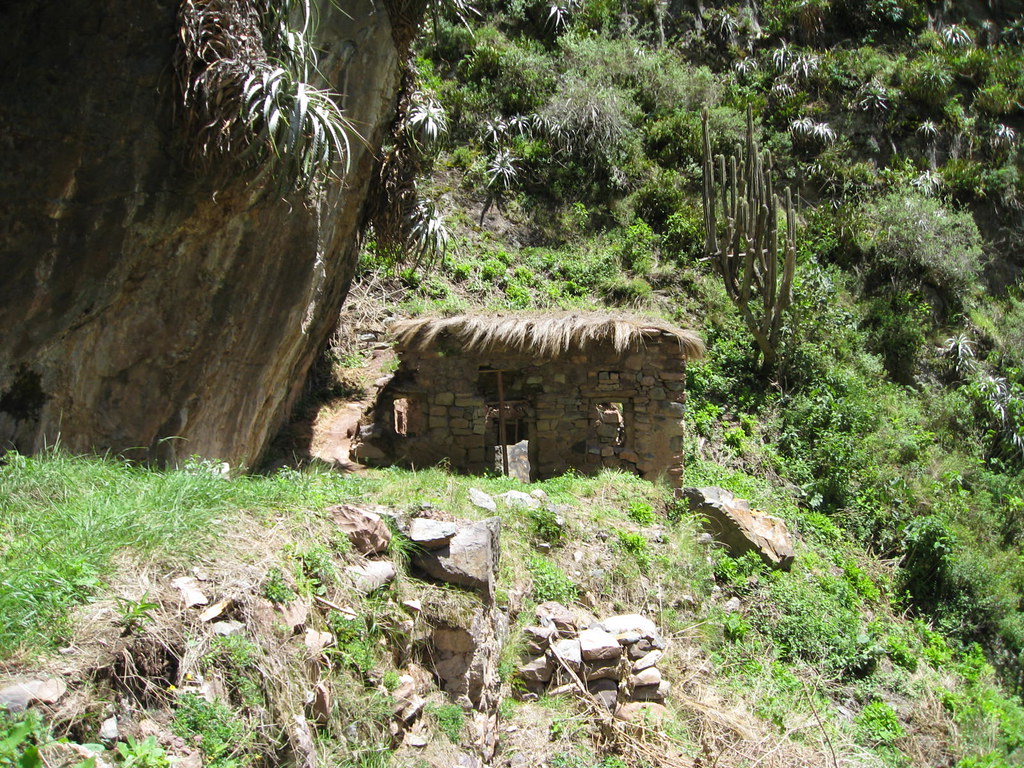
Beside the main carved rock, there are enclosures with ordinary masonry walls (stone joined with mud mortar) that are now abandoned.
Stone stairways and paths connect the different levels; some sources speak of a “scale of 100 meters in height” in the vertical development of the site.

Highlighted Elements
- Carved Basalt Rock: In the central part of the archaeological complex, there is a large carved bedrock, which functions as an “altar” or ritual portal. It features high-relief carvings, trapezoidal and stepped shapes, niches, and alcoves.
- Double-jamb Niches: Trapezoidal niches with double lateral supports (“jambs”) are observed on the walls adjacent to the bedrock. These architectural elements are characteristic of certain Inca ritual buildings.
- Chacana and Geometric Motifs: Around the carved rock, there is a representation of the chacana (Andean cross) and geometric shapes that symbolize the Andean cosmos and have astronomical and ritual interpretations.
- Agricultural Terraces and Integration into the Landscape: Although the main focus is the ritual space, the site is integrated into the Andean productive environment through platforms and terraces, suggesting a link between crops, water, and ceremony.


Archaeoastronomical and Symbolic Interpretation
Some studies and popular guides suggest that the Ñaupa Iglesia “altar-portal” had an orientation or function linked to celestial phenomena (solstices, equinoxes, the Southern Cross). For example: “It is a solar astronomical site of the Inca culture, where the solstices and equinoxes were recorded.”
The presence of the chacana symbol and the type of niches suggest that the site was part of a complex Andean worldview in which three worlds were articulated: Hanan Pacha (upper world), Kay Pacha (intermediate world), and Ukhu Pacha (lower world). Some guides interpret it as an “interdimensional portal” in a modern sense.
The location on the hillside, the view over the valley and the river, as well as the use of bedrock, reinforce the idea that the site was a point of convergence between landscape, cosmos, and society.


Conservation, Tourism, and Sustainability
Although it is a site of great heritage value, Ñaupa Iglesia lacks the infrastructure of Cusco’s major archaeological centers: signage, railings, official guides, and extensive tourist services. This means that visitors must move around more responsibly.
The state of conservation is considered “poor” in parts, according to the municipality of Ollantaytambo. It is important to respect the regulations, not touching carvings, not removing stones, and not leaving trash.
From a sustainable tourism perspective, visiting with local guides, respecting the environment, coordinating with the Pachar community, and avoiding negative impacts on the site are recommended practices.
Although the flow of visitors is limited, there is potential for the site to gain greater visibility; however, this must be balanced with heritage protection.
Myths, Contemporary Beliefs, and Living Culture
In local tradition and among some spiritual visitors, Ñaupa Iglesia is spoken of as a “dimensional portal,” a “cosmic door,” a place of energy where ceremonies of reverence to the earth, offerings, and meditation are performed. These interpretations have more of a symbolic-spiritual nature than rigorous academic ones, but they are part of the lived experience of the place.
Andean communities continue to preserve knowledge linked to the earth, water, and the hills; upon visiting the site, one can notice contemporary offerings, coca leaves, petals, and stacked stones as a mark of devotion.
The name “Choquequilla” appears in some stories and is linked to the moon (“quilla” in Quechua) and/or gold (“choque”), suggesting a lunar ritual or gold-ceremonial function. This name is less academically documented, but appears in tourist guides.

Relevance to the Archaeological Tourism Route
Although not as well-known as Machu Picchu or Ollantaytambo, Ñaupa Iglesia offers an alternative option for those seeking quieter, less-intervened, and more authentic archaeological experiences.
It’s ideal as a complement to a visit to the Sacred Valley: after Pisac and Ollantaytambo, you can include this site to diversify your itinerary.
It can be considered for hiking, spirituality, light archaeology, and landscape photography.