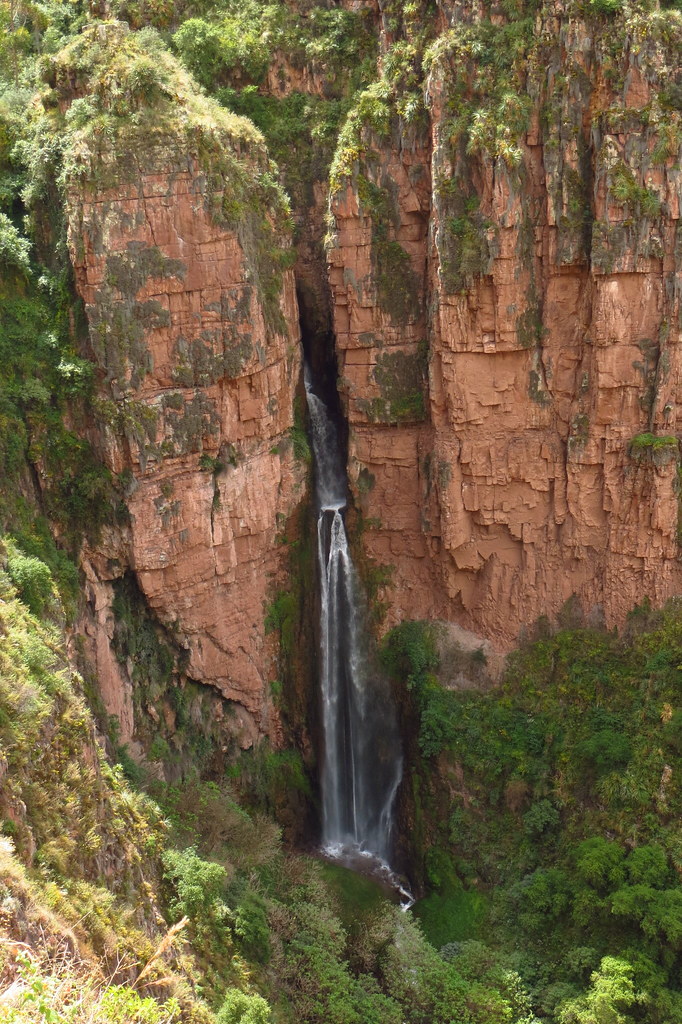

Perolniyoc is one of the less crowded jewels of the Sacred Valley: an imposing waterfall that falls through a red gorge and, above it, the archaeological site known as Raqaypata / Perolniyoc, with terraces, warehouses and remains of buildings that show pre-Inca and Inca occupation.
Perolniyoc Waterfall descends from the top of the mountain in a setting surrounded by Andean vegetation. Its cascade exceeds 45 meters, creating a refreshing mist and a sound that energizes visitors. At the summit, there is an archaeological complex known as Raqaypata. The site offers panoramic views of the Sacred Valley and preserves structures linked to agricultural, administrative, and ceremonial uses.
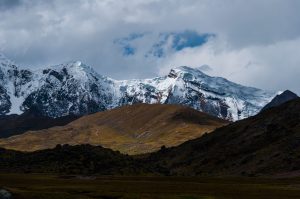
During the rainy season (November to March), the water flow increases, revealing its full power and beauty. During the dry season, the landscape offers a spectacular contrast between the rocks, the clear sky, and the golden hues of the Puna.

Raqaypata: A Story Above the Clouds
Above the waterfall, the Raqaypata archaeological site rises, a group of pre-Inca and Inca structures that seem to watch over the valley from above.
-The name “Raqaypata” comes from Quechua:
-Raqay means “warehouse” or “deposit.”
-Pata can be translated as “height” or “platform.”
Together, it is interpreted as “warehouse on high.”
It is believed that rituals related to water, a sacred element for the Incas, were performed here, in addition to serving as an observation point and agricultural storage.
The site preserves remains of finely carved stone walls, agricultural terraces, rectangular enclosures, and ceremonial spaces. Despite its modest size compared to other Inca complexes, its panoramic location and spiritual connection to the waterfall make it a unique site.

Architecture and Construction Elements
Main Features:
-Rectangular and quadrangular structures, well distributed on the sloping terrain. The walls reach up to 2.5 meters in height in some areas.
-Use of local lithic materials (sandstone, conglomerate, limestone) with mud mortar, irregular masonry, and adaptation to the rocky outcrop.
-Elements such as niches (niches in walls), large semicircular or curved retaining walls, water channels, and terraces around the site.
-The slope and bedrock were utilized: the enclosures were built on outcrops to elevate their position and visibility.

Layout:
-Storage enclosures (“colcas”) for deposits, “kallanka”-type buildings that could have been used for lodging, administration, or ceremonies.
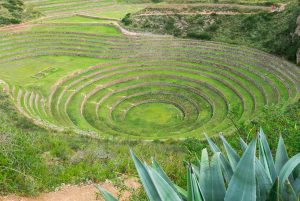
-Agricultural terraces or terraces around the site, suggesting in situ production or links to the agricultural areas of the valley.
-Access to the site is via a steep bridleway, which connects the base of the slope to the upper enclosures.

Perolniyoc Waterfall: Nature and Landscape
Perolniyoc Falls has varying measurements: some sources indicate a height of approximately 45 meters, while others cite a height of up to 80-100 meters.
The waterfall is described as a “bridal veil” as it plunges, with reddish rock in the gorge of the ravine that houses it.
-Natural location: The waterfall is located below the archaeological complex, creating a double impact: first the view of the water, then the climb toward the archaeological site overlooking the waterfall. This contributes to the dramatic character of the site.
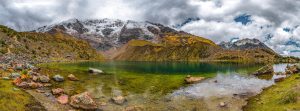
-Ecological environment: high mountain vegetation, ravine edges, presence of riparian flora, mosses on rocks, and the river that flows into the Vilcanota River.

The Symbolism of Water for the Incas
Water was one of the most sacred elements in the Andean world. It represented life, fertility, and the spiritual connection with the gods.
In many Inca temples and sites, such as Tipón and Tambomachay, canals and ceremonial fountains dedicated to the worship of water were built.
Perolniyoc follows this same logic: the waterfall would have been considered a “huaca,” or sacred site, where rituals were performed to give thanks for the rains, the harvest, and the protection of the apus (mountain spirits).
Even today, the people of Socma maintain ancestral traditions of respect for water and nature, making symbolic offerings known as “payments to the earth.”

A Hike Between Landscapes and Traditions
Access to Perolniyoc begins in the community of Socma, a small Andean village where time seems to have stopped. From there, a well-marked trail gently ascends between farms, traditional adobe houses, and open views of the valley.
As you continue, the sound of running water begins to be heard in the distance. After a short hike, you reach the base of the waterfall: a perfect setting to rest, take photographs, and connect with the energy of the place.
From the waterfall, a steeper path leads to the ruins of Raqaypata. The climb may require some effort, but the panoramic view of the Sacred Valley from above amply rewards every step.

Cultural, Symbolic, and Present-Day Significance
Culturally, the name “Perolniyoc” appears to derive from the word “perol” (vessel) + “-niyoc” (which has), referring to two hollows that “look like pots.”
The name “Raqaypata” comes from “raqay” (shed/ruin) and “pata” (upper part) — literally meaning “ruins in the upper part.”
Due to its location and architecture, it is interpreted as an Inca territorial control point, with a view of the valley and the ability to store resources, monitor routes, and perform ceremonies.
Currently, the site is part of the less crowded tourist route of the Sacred Valley: it combines nature, archaeology, and moderate adventure. This makes it an interesting alternative for those looking for something different from the more well-known centers.
The restoration work, carried out between 2013 and 2016, allowed the site to be revalued for the local community and visitors.

Flora, Fauna, and Climate of the Surrounding Area
Typical flora: Andean grasslands, scrubland, mosses in rocky areas, and riparian vegetation near the base of the falls (grasses, ferns); species adapted to the mid-high altitudes of the Sacred Valley.
Possible fauna: High-altitude and valley birds (raptors, local hummingbirds), small Andean mammals, and fauna associated with mountain ecosystems; observation depends on the season and time of day.
Climate: High Puna/high valley climate with warm/cold days and cold nights; possibility of rain in the wet season (November–March) and clear days in the dry season (May–September).

A Hidden Gem of the Sacred Valley
Visiting Perolniyoc is discovering a part of the Sacred Valley that preserves the essence of the Andes: living mountains, history in stone, sacred water, and communities that maintain their roots.
There are no large crowds, no tourist attractions, and no urban noise: just the sound of the wind, the water, and time that seems to stand still.
It is a perfect destination for those seeking authenticity, nature, and spirituality in a single experience.