
Colca Canyon is not a place that introduces itself. It does not offer a clear beginning, nor does it provide a single defining moment. Its presence is cumulative. It builds slowly, layer by layer, until the traveler realizes that something fundamental has shifted — not in the landscape, but in the way the landscape is being perceived.
This is not a destination that asks to be admired.
It asks to be understood.
Deep in the southern Andes of Peru, Colca exists beyond the logic of modern travel. While it is frequently defined by its depth or altitude, these descriptions remain superficial. Numbers fail here. What defines Colca is continuity — of land, of culture, of silence, of time.
Colca is not impressive in the conventional sense.
It is absorbing.

Summary
The Approach: When the World Begins to Thin
Long before the canyon appears, Colca begins its work. Roads rise gradually, not dramatically. The horizon opens, vegetation becomes sparse, and the air begins to change texture. Breathing becomes conscious. The body reacts before the mind does.
This is not discomfort; it is recalibration.
As altitude increases, unnecessary movement disappears. Gestures become economical. Thought simplifies. The environment does not allow excess — physical or mental. What remains is attention.
By the time the canyon reveals itself, the traveler has already been altered.

A Landscape That Refuses to Be Captured
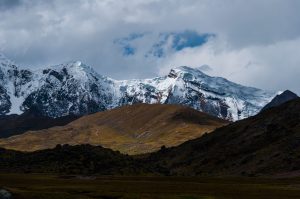
Colca Canyon cannot be taken in at once. Its scale is too vast, its depth too layered. The eye searches for reference points and finds none. Distance becomes abstract. The river below feels both near and unreachable.
This lack of visual closure is intentional in nature. The canyon does not resolve into a single image. It continues beyond the frame, beyond expectation, beyond comprehension.
Colca does not offer a postcard.
It offers a confrontation with scale.
Geological Time Made Visible
The walls of the canyon are not decorative. They are records. Layers of volcanic rock, erosion, collapse, and renewal are visible in every direction. Each stratum represents a different moment in time — not decades or centuries, but geological ages.
Standing here, time loses its familiar meaning. Human history feels brief. Movement feels temporary. The land feels permanent.
This awareness does not overwhelm.
It stabilizes.
Altitude as a Teacher
In Colca, altitude is not an obstacle to overcome, nor a badge to claim. It is a condition that shapes behavior. The thin air forces slowness. The body demands respect.
This enforced pace is not restrictive. It is clarifying. Without the possibility of rushing, presence becomes unavoidable. One learns to listen — to breath, to footsteps, to the wind.
Altitude strips experience down to essentials.
Human Intelligence Without Arrogance
Perhaps the most profound lesson of Colca lies in how humans learned to survive here. Long before modern technology, Andean societies transformed this harsh environment into productive land — not by altering it aggressively, but by understanding it.
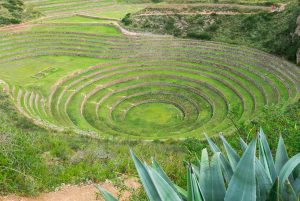
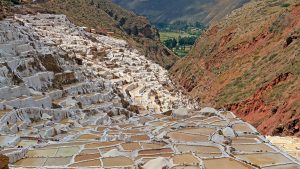
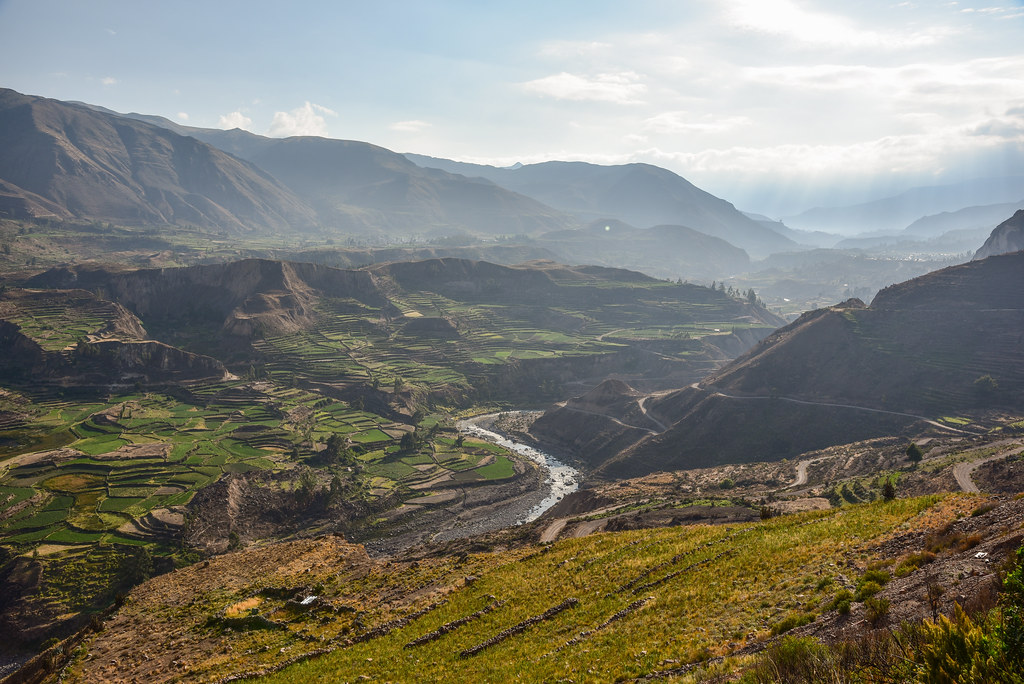
Agricultural terraces cascade across the canyon walls in perfect alignment with the land’s natural contours. These terraces regulate temperature, retain moisture, and prevent erosion. They are systems of intelligence, not dominance.
What makes them remarkable is not their age, but their relevance. Many remain in use today. This continuity speaks of adaptation rather than nostalgia.
In Colca, the past is not abandoned.
It is integrated.
Communities Shaped by Place
Life in the Colca Valley follows rhythms older than the concept of travel. Agriculture, climate, and communal responsibility guide daily existence. Time is not divided by schedules, but by cycles.
Traditional clothing is worn because it is functional. Language persists because it carries meaning. Social structures endure because they support collective survival.
Nothing here exists to be explained to outsiders. Culture is not displayed. It is lived.
For the attentive traveler, this creates a rare experience — one rooted in observation rather than consumption.


The Landscape as Daily Companion
In Colca, the canyon is not something people visit. It is something they live within. The land is not scenery; it is context.
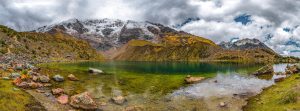
Mountains, terraces, and open space are not exceptional — they are normal. This familiarity creates a calm relationship with scale. There is no need to dominate what has always been present.
For visitors, this perspective is transformative. The canyon ceases to be a destination and becomes a system — one that includes human life without centering it.
Time Without Distraction
Colca removes distraction by default. There is little noise, little visual clutter, little urgency. Without constant stimulation, time stretches naturally.
Moments expand. Light becomes noticeable. Shadows mark progression. Even stillness feels active.
This is not boredom.
It is attentiveness.
Many travelers discover that the absence of stimulation is precisely what allows the experience to deepen.
The Condor: Scale in Motion
When the Andean condor appears, it does not interrupt the landscape — it completes it. Its massive wings catch thermal currents rising from the canyon, allowing it to move with minimal effort.
The condor does not circle for attention. It glides, silent and precise. Against the canyon’s vastness, its movement feels measured rather than dramatic.
This encounter does not feel staged. It feels earned.

Silence That Anchors
Silence in Colca is not empty. It carries distance, altitude, and wind. It creates space for awareness rather than isolation.
Without constant sound, thought slows. Observation sharpens. The traveler becomes grounded — physically and mentally.
Silence here is not absence.
It is structure.
A Destination That Does Not Negotiate Its Identity
Colca Canyon does not adapt itself to expectation. It does not soften its edges or simplify its meaning. It remains consistent, restrained, and uncompromising.
Those who arrive seeking entertainment may struggle. Those seeking understanding often leave changed.
Colca does not try to be memorable.
It simply is.
Travel Reduced to Presence
In Colca, travel is not about accumulation. It is about alignment — with land, with rhythm, with time.
Without excess, meaning emerges naturally. Without urgency, depth becomes possible.
Colca reminds travelers that the most profound journeys are not measured in distance, but in attention.
What Remains After Leaving
Colca Canyon does not stay in memory as an image. It stays as a sensation — the quiet weight of space, the slow movement of light, the awareness of having briefly stepped outside modern rhythm.
It does not fade.
It recalibrates.
Colca is not a destination to revisit mentally.
It becomes a reference — a place against which other experiences are unconsciously measured.
Once encountered, it changes how travel is understood.
And it does so without ever asking for permission.