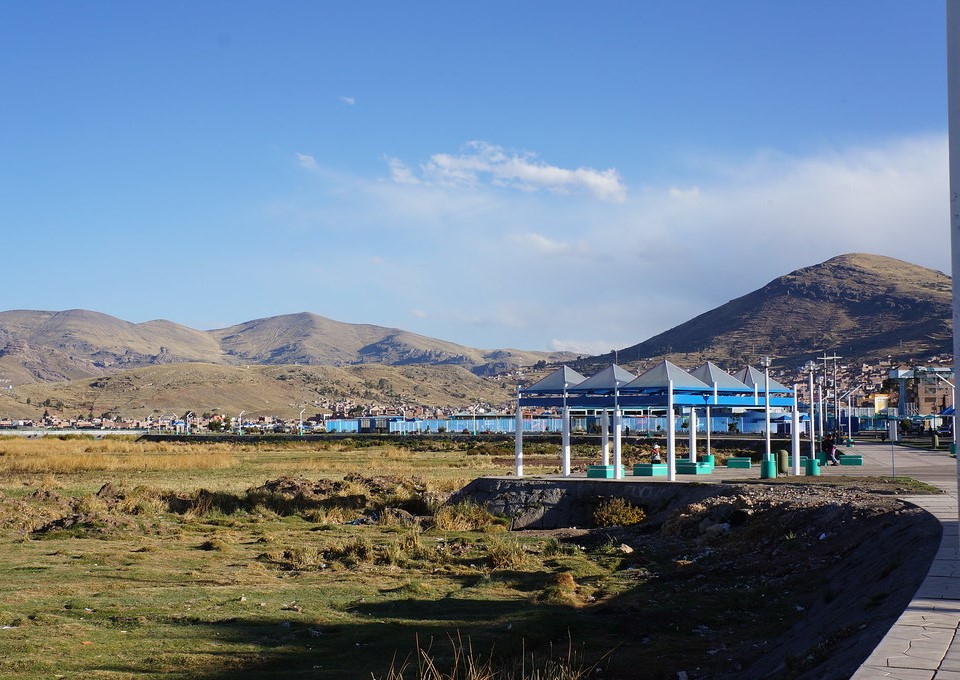

Puno is not a place that tries to welcome you gently. It does not lower itself to be accessible, nor does it translate itself immediately. Puno exists at a height where the body must adapt and the mind must slow down. This is not accidental. Altitude here is not geography — it is character.
To arrive in Puno is to arrive in a different state of awareness.
Everything feels more exposed: the light, the cold, the silence, the emotions. There is less atmosphere between you and the sky, and somehow less distance between thought and feeling. Puno does not overwhelm through spectacle; it reshapes perception through restraint.
This is a place where identity is not explained.
It is sustained.


Summary
The High Plateau: A Space Without Distraction
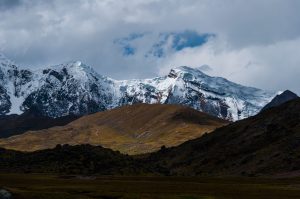
The Altiplano surrounding Puno stretches wide and open, almost confrontational in its simplicity. There are no dramatic forests, no sudden color explosions. Instead, there is scale — horizontal, uninterrupted, honest.
This openness forces a recalibration. Without visual clutter, the mind cannot jump from stimulus to stimulus. Attention settles. Time expands.
In Puno, space is not empty.
It is intentional.
The land teaches patience. Movement is slower. Decisions are quieter. There is no need to fill silence when silence already holds meaning.
A City Shaped by Altitude and Endurance
Puno’s urban presence is inseparable from its environment. The city does not dominate the landscape; it negotiates with it. Buildings are functional, streets are direct, and life unfolds with an economy of effort shaped by thin air and cold mornings.
Here, survival has never been abstract. It has always been practical.
This practicality gives Puno a grounded honesty. There is little interest in performance, little interest in embellishment. What exists does so because it serves a purpose — social, cultural, or communal.
The result is a city that feels real rather than curated.

Lake Titicaca: Stillness as Power
Lake Titicaca does not announce itself with drama. Its surface is often calm, reflective, almost indifferent. Yet this stillness carries weight.
The lake is not a background. It is a presence — expansive, silent, and constant. Its scale redefines distance. Its horizon softens the boundary between water and sky.
What makes Titicaca extraordinary is not movement, but continuity. It has always been here, sustaining life, shaping belief systems, anchoring communities.
The lake does not change to impress.
It remains to endure.

Water as Origin, Not Resource
In Puno, water is not merely a utility. It is origin. Long before borders, before cities, before the concept of nationhood, the lake existed as a source of meaning.
This relationship with water is not romanticized. It is respected.
Communities around the lake do not speak of it as something owned, but as something shared — a living system that demands balance rather than extraction. This worldview creates a subtle but powerful contrast with modern notions of progress.
Here, sustainability is not a concept.
It is instinct.

Human Presence Without Excess
Life on and around the lake follows patterns refined over centuries. Movements are deliberate. Tools are simple. Social bonds are strong because isolation makes cooperation essential.
There is no separation between daily life and tradition. Culture is not preserved in museums; it is carried forward through repetition.
This continuity gives Puno a depth that cannot be staged. What the traveler witnesses is not reenactment, but persistence.

Silence That Carries Memory
Silence in Puno is different from silence elsewhere. It is not empty, nor passive. It carries history, altitude, and resilience.
Morning silence feels sharp and clear. Night silence feels expansive, almost cosmic. Without constant noise, awareness widens.
In these moments, Puno reveals its most subtle quality: emotional honesty. Without distraction, thoughts surface. The environment does not soothe — it reflects.

Festivity as Release, Not Escape
When celebration arrives in Puno, it does not contradict the seriousness of daily life — it completes it. Music, color, movement, and ritual erupt with intensity precisely because restraint defines the rest of the year.
Festivals here are not entertainment. They are release, affirmation, and continuity. They connect generations and reaffirm belonging.
Joy in Puno is not casual.
It is earned.

A Culture That Does Not Translate Easily
Puno does not explain itself in terms comfortable to outsiders. Its beliefs, rhythms, and social codes are not designed for easy consumption.
This can feel challenging — and that challenge is part of the value.
Understanding Puno requires observation without interference. It asks visitors to let go of expectation and accept partial understanding. Not everything needs to be decoded.
Some places are meant to be respected more than understood.
Time Experienced Vertically
At high altitude, time behaves differently. Days feel longer. Moments stretch. Fatigue enforces presence.
In Puno, the future does not rush forward. The past does not disappear. Both coexist in daily life — in language, in gestures, in routine.
This vertical sense of time — layered rather than linear — gives Puno its emotional density.
A Place That Filters the Traveler
Not everyone connects with Puno. And that is not failure.
Puno does not adapt to preference. It filters. Those who seek comfort may resist it. Those who seek depth often recognize something familiar — even if they cannot name it.
Puno meets travelers exactly where they are, without adjustment.
What Puno Leaves Behind
Puno does not linger as a checklist memory. It stays as a sensation — the weight of altitude, the clarity of cold air, the calm intensity of the lake.
It changes how silence is perceived.
It reframes what “remote” means.
It reminds travelers that culture does not need explanation to be valid.
Puno does not try to be unforgettable.
It simply stays.

Puno as a Necessary Pause
In the broader journey through Peru, Puno acts as a counterbalance. Where other destinations stimulate, Puno grounds. Where others impress, Puno stabilizes.
It is not a climax.
It is an anchor.
A place where the journey slows not because there is less to see, but because there is more to feel.
Puno: Presence Over Spectacle
Puno offers no shortcuts to meaning. It requires time, humility, and attention.
Those who give it these things leave changed — quieter, steadier, more aware.
Because Puno does not add noise to the journey.
It removes it.
And in that removal, something essential remains.