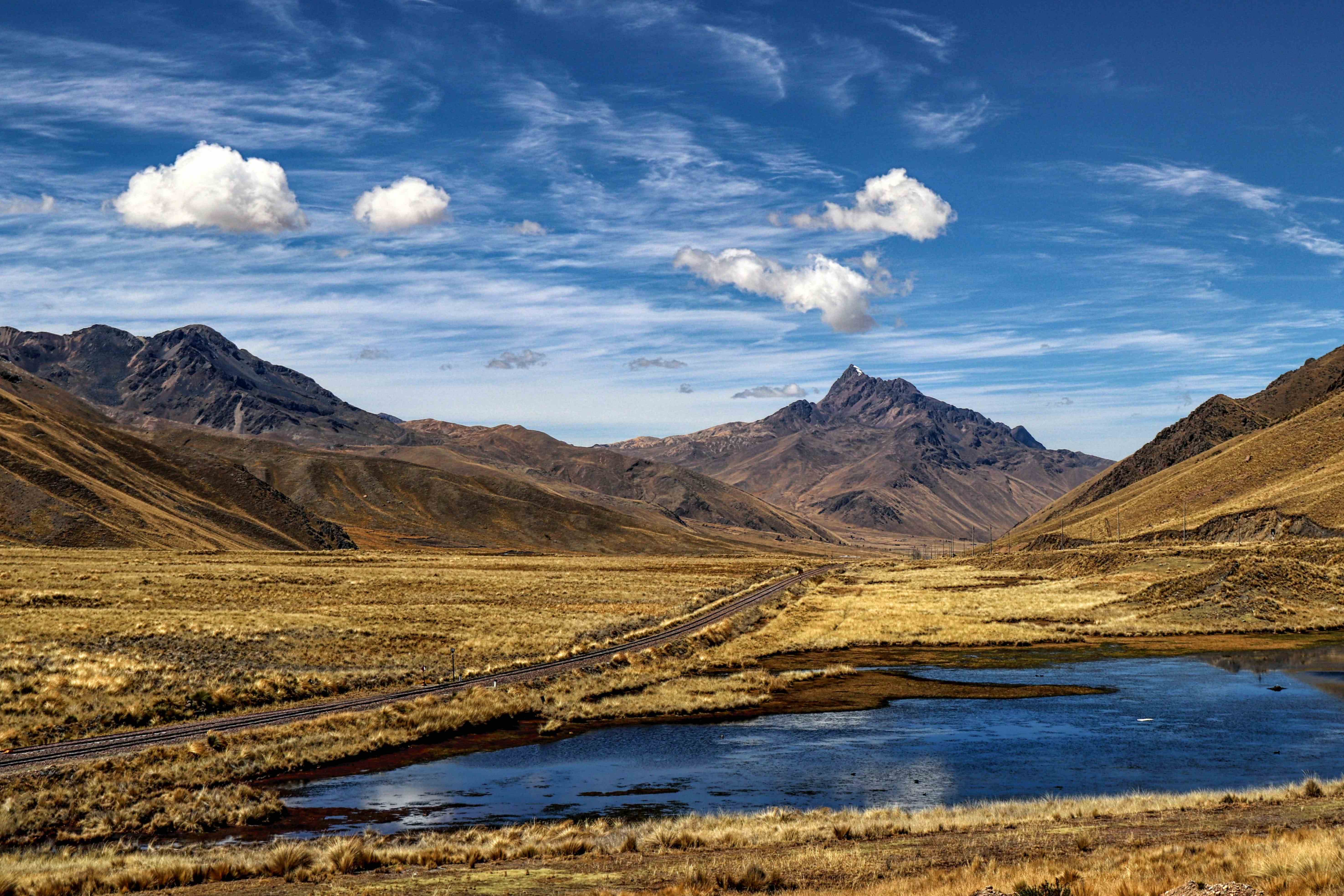

Abra La Raya is a natural pass located in the Peruvian Andes, between the regions of Cusco and Puno. At an approximate altitude of 4,335 meters above sea level, this point marks the border between the two regions and is also the highest point on the route connecting them.
Some sources indicate a slightly different altitude for Abra La Raya, around 4,312 meters, according to certain maps, but in any case, the feeling of being at high altitude is unmistakable. At this elevation, Abra La Raya reveals its true Andean character: the air becomes colder and drier, the atmospheric pressure decreases, and the climate takes on the characteristics of the puna days of intense sun, freezing nights, and a constant wind that seems never to stop.
The vast and serene landscape of Abra La Raya stretches in all directions, covered in ichu, the golden grass that survives the cold, while groups of llamas, alpacas, and vicuñas graze peacefully. In the background, the snow-capped peaks of the La Raya mountain range complete a scene that encapsulates the essence of the Peruvian highlands: untamed nature, silence, and a beauty that commands respect.

The Mountain Range and Mountains
The pass is part of the La Raya mountain range, which stretches between Cusco and Puno.
One of its highest peaks is the snow-capped Chimboya (5,489 m), which can be seen from the pass on clear days.
The mountain range acts as a natural divide and offers spectacular panoramic views of the Andes, with the vastness of the Altiplano unfolding at the traveler’s feet.

History of the Site
-Pre-Hispanic Era
Before the arrival of the Spanish, the routes across the Andean highlands were fundamental for trade between communities. The La Raya pass was part of a network of roads in the Inca world that connected the Cusco Valley with the highlands (Qollasuyo).
It was used for the trade of goods, the movement of people and livestock (such as llamas and alpacas), and also for territorial control.
-Colonial Era and the Railroad
During the colonial period, the route remained important, and in the 19th century, the construction of the Cusco–Puno railway included a station at this high point, solidifying its role as a key crossing.
The train station, La Raya Station (located at this pass), was built in 1886, becoming the highest point on the line.

-Modern Era and Tourism
Today, Abra La Raya is a near-obligatory tourist stop for those traveling between Cusco and Puno, whether by bus, train, or car. It has become a viewpoint, a spot for panoramic photos, a craft market, and a meeting point between the urban world and the remote highlands.
What to See and Do in Abra La Raya
-Viewpoints and Landscapes
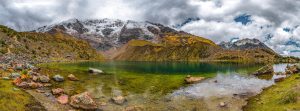
The natural scenery is breathtaking: stopping at the pass, visitors can observe the mountain range, the ichu grass plains, grazing llamas and alpacas, and the snow-capped peaks. The contrast of colors the yellow of the ichu grass, the white of the snow, the blue of the sky makes for a magnificent photographic experience.
One of the most distinctive views is that of the Chimboya mountain from the pass.
-Fauna and Flora
Although the altitude is demanding, wildlife persists: alpacas, llamas, and vicuñas can be seen in the area. The typical vegetation is puna: ichu grass, pajonales (high-altitude grasslands), and some shrubs adapted to the cold and wind. The environment conveys a sense of vastness, altitude, and isolation, quite different from that of the lower valleys.

-Handicrafts and Local Market
At the same point as the pass of Abra La Raya, a small artisan market sets up where farmers and craftspeople offer alpaca textiles, clothing, Andean souvenirs, and the opportunity to take photos with typical animals of the highlands.
This market at Abra La Raya, more than just a tourist stall, is part of the livelihood of local communities who benefit from the flow of travelers. It’s a great opportunity to appreciate and purchase authentic handicrafts, and also to chat with the locals who bring life and color to this high Andean landscape.
-Cultural and Spiritual Connection
The high Andean plateau holds cultural significance: the mountains were considered apus (protective spirits) in the Andean worldview. For example, in this region, they speak of the apu Chimboya.
Furthermore, the altitude, the whiteness of the snow, the vastness of the sky, and the silence convey an almost spiritual quality: to stop, breathe, and contemplate. As one blog states: “the experience of stopping and descending into this place is worthwhile in itself.”

Geographical and Human Contrast
The Abra La Raya pass represents a crossroads: between two regions (Cusco and Puno), between the valley and the high plateau, between the humanized (market, road) and the wild (high mountains, snow, high plateau).
This contrast generates rich content for a blog: images, reflections on altitude, Andean culture, and nature.

Photography and Visual Storytelling
The panoramic views, Andean animals, craft stalls, the old train station, and the colors of the landscape (yellowish ichu grass, intense blue sky, white snow) allow the entry to be illustrated with multiple photos, keeping the reader engaged.
Living History
From the Inca road network to the railway line, and including the current artisan market, there is a historical thread that connects the past with the present. This adds depth to the story: not just “a beautiful viewpoint,” but “a historical and cultural landmark.”

Reflection on Altitude and Nature
The experience of being above 4,000 meters evokes special sensations: the thinner air, the feeling of solitude or immensity, the sheer scale of the mountain before the traveler. This type of reflection can help the reader imagine the experience, not just see the facts.
Community and Sustainability
The artisans who work there, the tourists who pass through, the vulnerable natural environment all of this can lead to blog posts about responsible tourism, local impact, and how visitors can respect the place.
Although Abra La Raya is often included in a relatively simple tourist route, it’s not a destination for spending several days, but rather a brief yet essential stop on the journey between Cusco and Puno.
However, its brevity doesn’t diminish its value; on the contrary, it’s precisely its fleeting nature that lends it a special magic. Stopping at Abra La Raya for just a few minutes is enough to feel the immensity of the Altiplano and the silent power of the surrounding mountains.
Abra La Raya is a place where time seems to stand still: the breeze blows gently, the clouds drift slowly over the snow-capped peaks, and the horizon stretches endlessly, inviting contemplation. Many travelers describe this stop as a pause amidst the movement, a moment when the body rests and the gaze expands.
Abra La Raya may not have grand infrastructure or long hikes, but it does offer an atmosphere of serenity and connection that few places can match.
The fresh air, the sound of the wind, the presence of grazing animals, and the quiet conversations with local artisans make Abra La Raya a sensory and human experience that lingers in the memory.
In a world where travel is often measured by destinations and activities, Abra La Raya reminds us that sometimes a single moment, a landscape, and a deep breath are enough to feel that you have been to a truly unique place.