
The Ausangate Trek is not just a hike in the Vilcanota Mountains. It is a profound journey into the spiritual heart of the Andes, where eternal glaciers, turquoise lagoons, and Quechua communities keep the essence of the Tahuantinsuyu alive.
Every step along this route is an encounter with nature in its purest form and with the Andean worldview, which understands mountains not as immobile rocks, but as Apus, sacred guardians who protect and give life.

Ausangate Mountain: Guardian of the Andes
At 6,384 meters high, Ausangate Mountain is the fifth highest peak in Peru and one of the most venerated in the Andes. Its snowy silhouette can be seen from Cusco on clear days, reminding everyone of the presence of a greater spirit.
In Quechua tradition, the Ausangate is an Apu, a living being with spiritual power. Rivers are born from its glaciers, fertilizing the valleys, feeding the alpacas, and maintaining the balance of life in Andean communities.

The Ausangate in the history of the Tahuantinsuyu
During the Inca Empire, the Ausangate was part of a network of sacred mountains that protected Cusco, the capital of the Tahuantinsuyu.
Ancient hikers traveled these trails carrying offerings to Pachamama, while llama caravans transported goods between communities. The path was, at the same time, a route of economic exchange and a space of spiritual connection.
Today, walking the Ausangate Trek is reliving that ancestral legacy, feeling the echoes of the past, and understanding how the Incas related to nature as part of their very existence.
Main Routes of the Ausangate Trek
🔹 Classic 5-Day Route
The most comprehensive route, crossing mountain passes over 5,000 meters and glacial lagoons that reflect the sky.
🔹 Shorter 3-Day Route
A condensed version for those with less time, but equally intense in landscapes and spirituality.
🔹 Ausangate Trek with Rainbow Mountain
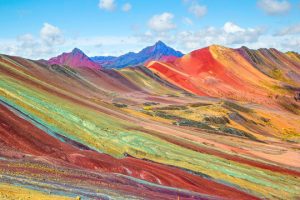
An option that combines Ausangate with the famous Vinicunca, the rainbow mountain that amazes with its natural hues of red, yellow, green, and blue.
🔹 Variation to Sibinacocha Lagoon
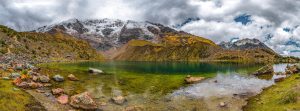
A less-traveled trail that takes travelers to a vast lagoon at almost 5,000 meters above sea level, surrounded by glaciers and wildlife.


Unique landscapes on the Ausangate Trek
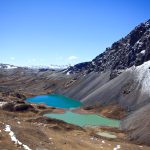
-Glacial lagoons: Pucacocha, Ausangatecocha, and Sibinacocha, turquoise mirrors amidst snow-capped mountains.
-Eternal glaciers: masses of ice that shimmer in the Andean sunlight.
-Vinicunca, the Rainbow Mountain: a geological phenomenon that has become a symbol of Cusco.
-Andean fauna: alpacas, llamas, vicuñas, and condors that roam freely in the valleys.
-High-altitude flora: ichu and medicinal plants that defy the extreme climate.


Living culture around Ausangate
The Apus and the Andean worldview
For the Quechua people, mountains are sacred spirits. Ausangate is one of the most powerful and is respected in rituals of gratitude.
Every year, thousands of pilgrims come to Ausangate to participate in this festival that unites Andean tradition and Christian faith. It is one of the largest pilgrimages in the Andes and a living example of cultural syncretism.
Quechua Communities
Throughout the trek, local families preserve their language, clothing, and way of life based on alpaca herding and weaving. Sharing a moment with them is like experiencing the true essence of the Andes.

Practical Guide to the Ausangate Trek
How to get to the start of the trek
From Cusco, you can access Tinki or Pacchanta, common starting points, by land transportation.
Recommended Acclimatization
-Spend at least 2 or 3 days in Cusco before the trek.
-Take previous excursions such as Sacsayhuamán or the Sacred Valley.
-Essential Equipment
-Waterproof hiking boots.
-Thermal and cold-resistant clothing.
-Walking poles.
-Sleeping bag suitable for sub-zero temperatures.
-Sunscreen, hat, and sunglasses.
-Nutrition during the trek
-Traditional foods such as quinoa, potatoes, corn, and Andean herbal teas like coca and muña predominate along the way. It is also recommended to bring energy snacks.
Accommodation
Most travelers camp in established areas, although in some sections it is possible to stay in rural houses in the communities.
Best time to trek
May to September: dry season, with clear skies and spectacular scenery.
November to March: rainy season, with more difficult routes but greener landscapes and fewer visitors.

Frequently asked questions about the Ausangate Trek
What is the maximum altitude of the trek?
The Palomani Pass reaches 5,200 meters above sea level.
Is previous experience necessary?
It’s not essential, but it is essential to be in good physical condition and be well acclimatized.
How many hours do you hike per day?
Between 5 and 8 hours, depending on the route and the weather.
Is it possible to see snow during the trek?
Yes, the Ausangate glaciers retain snow year-round.
What kind of wildlife can be observed?
Mainly alpacas, llamas, vicuñas, vizcachas, and occasionally condors.
A transformative experience
The Ausangate Trek is not just a physical challenge: it is a journey into the soul of the Andes. Walking among mountains that seem to touch the sky, crossing snow-covered passes, and sleeping under a blanket of stars transforms the traveler.
Here, every sunrise is a spectacle of colors over the glaciers, every step is a reminder of the grandeur of nature, and every encounter with the Quechua communities is a lesson in simplicity and ancestral wisdom.
Final reflection
The Ausangate Trek is not limited to a hike through the mountains. It is a journey that transcends the physical and becomes a spiritual experience. Every step along its trails is a dialogue with the Apus, a reminder that nature is sacred and that the Andes hold stories that go beyond the visible.
When you contemplate the turquoise lagoons that reflect the eternal glaciers, you understand that they are not simple mirrors of water, but guardians of ancient memories. When you climb a mountain pass at over 5,000 meters, you feel in your breath the effort of those who walked there in the time of Tahuantinsuyu, carrying offerings and dreams to the Andean gods.
The Ausangate not only challenges your legs and lungs: it challenges your way of seeing the world. It invites you to walk more slowly, to listen to the wind, to respect the silence, and to value the wisdom of the Quechua communities who live in harmony with these mountains.
This trek teaches us that true richness lies not in reaching the summit quickly or conquering the summit, but in the journey itself, in the deep connection with the land, and in the recognition that we are part of something greater.
Those who return from the Ausangate trek come back with a different perspective:
-With gratitude for nature.
-With respect for the cultures that protect it.
-With the certainty of having walked in a place where the sky touches the earth and the spirit soars.
The Ausangate Trek is not just another destination: it is an experience that remains in the heart forever.