
The Inka Museum of Cusco preserves the legacy of the Inka Empire with archaeological artifacts, textiles, and ancestral art. Located in the heart of Cusco, it offers a unique experience to discover the history, culture, and wisdom of the most powerful civilization of ancient Peru.

Architecture
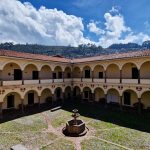
The Admiral’s House displays typical features of Cusco’s viceregal architecture: balconies, coffered ceilings, internal courtyards, carved wood, decorative columns, and more. These elements not only serve an aesthetic purpose but also reflect the cultural fusion (materials, techniques, and decoration) between colonial and indigenous influences.
The museum features several rooms organized chronologically and by theme. One of the most notable is the Mallki Wasi (“House of the Dead” or Hall of the Ancestors), which recreates an Inka tomb and displays funerary objects, mummies, and ancestral cult artifacts.


Collection and Thematic Rooms
The Inka Museum houses one of the most comprehensive archaeological collections in southern Peru, with thousands of pieces distributed in several rooms organized chronologically: from pre-Inka cultures to the colonial period.
Pre-Inka Cultures: The Origins of the Andean World
These rooms display pieces from civilizations such as the Nazca, Paracas, Pucará, Mochica, and Wari, which preceded the Inka Empire.
Among the objects are polychrome ceramics, stone tools, textiles, and ritual objects that demonstrate the evolution of Andean techniques and religious thought.

The Empire of the Sun
- This is the heart of the museum. The splendor of the Tawantinsuyu is on display here:
- Fine textiles made from alpaca and vicuña wool, considered among the finest from the ancient world.
- Carved and painted keros (ceremonial vessels) used for toasting in religious rituals.
- Gold and silver objects represented power and connection with the sun gods.
- Measuring and astronomical observation instruments, evidence of the Inka’s advanced knowledge of agriculture and astronomy.

A special section explains the organization of the empire, the urban planning of Cusco, the road system (Qhapaq Ñan), and the function of quipus, knotted ropes used as a system of accounting and narrative record keeping.
Mallki Wasi: The House of the Ancestors
This is one of the most striking rooms. “Mallki Wasi” means “House of the Dead” in Quechua.
Mummies and funerary offerings are displayed here, demonstrating the Inka’s deep respect for death and spiritual continuity. The mummies are displayed in the fetal position, accompanied by ceramics, textiles, and food, elements that reflect their belief in life after death.

Colonial Cusco and Cultural Resistance
- After the Spanish conquest, the Inka culture did not disappear, but rather transformed. The museum depicts this process through:
- Paintings from the Cusco School, where indigenous artists fused Christian iconography with Andean symbols.
- Portraits of baptized Inka nobles, who attempted to maintain their lineage within the new viceregal structure.
- Religious documents and objects that demonstrate the coexistence and syncretism between the two worldviews.

Historical Documents
One of the highlights is a copy of the second edition (18th century) of the Royal Commentaries by Garcilaso de la Vega.
 Special Collections:
- Querós (keros): typical Inka ceremonial vessels used in rituals.
- Inka Mummies: some preserved human remains in dedicated rooms.
- Models and educational representations: models of temples, tombs, maps, to explain architecture, urban organization, ways of life.
More detailed internal exhibits and displays
In addition to the general rooms (“ceramics,” “Inka art,” “textiles,” etc.), there are some specific exhibits and objects:
In the Inka medicine section, examples of cranial surgery (trepanations) and ritual cranial deformations are displayed. This demonstrates medical knowledge, ritual practices, and cultural values related to the body and soul.
In the metallurgical art section: ornaments for both women and men, ceremonial vessels made of precious metal, weapons, and metal objects that serve both decorative and symbolic functions.
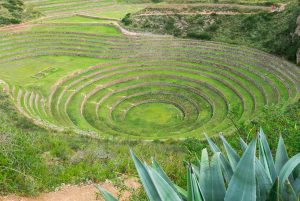
Examples of Inka architecture and urban planning: models of urban centers, such as the layout of Inka cities, the use of terraces, masonry techniques, and the organization of open spaces. This makes it very visual for the visitor or reader.


The symbolic value of the museum
The Inka Museum not only exhibits artifacts but also narrates the continuity of a living civilization.
Each textile, ceramic, or sculpture represents centuries of knowledge passed down from generation to generation. The museum’s importance lies in its ability to connect the past with the present, helping present-day communities understand their roots.
Furthermore, the museum serves an educational and scientific function. Its laboratories and storage facilities house research, restoration, and conservation projects for archaeological artifacts, as well as cultural outreach programs and workshops for students and tourists.

Research and Academic Contributions
The Inka Museum is administered by the National University of San Antonio Abad del Cusco (UNSAAC), which gives it a unique academic prestige among museums in the region.
Throughout the 20th and 21st centuries, it has collaborated with international institutions on research in archaeology, anthropology, and pre-Columbian art, in addition to being part of Latin American museum networks.
- It houses a library specializing in archaeology and ethnohistory.
- It organizes workshops on traditional weaving, conferences, and temporary exhibitions.
- It collaborates with Andean communities to rescue ancestral techniques.
- It has also published catalogs, monographs, and guides, and has served as an internship center for archaeology and tourism students.
Documents, research, and publications
One of the most interesting recent works is the book “Archaeological and Ethnohistorical Research on the Inka Qorikancha-Wanakauri Ritual Path,” which compiles research conducted by Cusco cultural professionals. It includes information on associated archaeological sites such as Matagua and Wanakauri.
Regarding the Inka Museum, the website itself describes its permanent exhibition, with activities that not only showcase but also seek to educate about techniques, materials, ritual uses, and more.