
Lake Titicaca, located at over 3,800 meters above sea level between Peru and Bolivia, is a natural and cultural gem that dazzles every traveler. This immense lake stands out not only for its breathtaking beauty and infinite tranquility but also for being home to communities that keep alive the ancestral traditions of the Andean peoples.
Among the most fascinating destinations on Lake Titicaca are three main islands: Uros, Taquile, and Amantaní, each with its own history, culture, and way of life. In this article, we’ll explore the best of each so you can plan your next adventure in the Peruvian highlands.
Uros Islands: The Art of Floating on Lake Titicaca
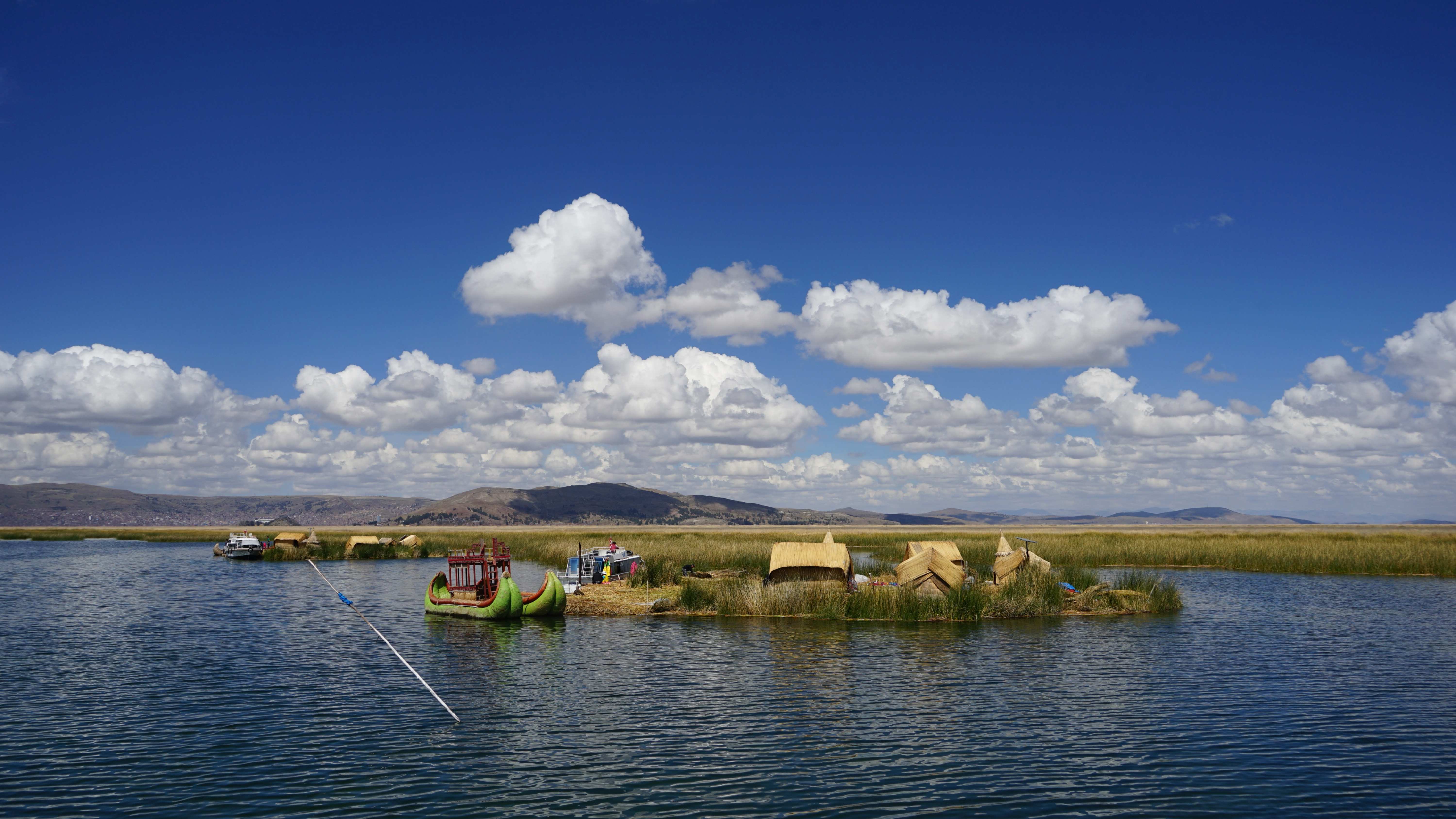
The Floating Islands of the Uros are undoubtedly one of the most iconic attractions in Puno and for tourism on Lake Titicaca. Just 6 kilometers from the port of Puno, these artificial islands, constructed entirely of totora reeds an aquatic plant native to the area are home to the descendants of the ancient Uros people, one of the oldest in the Andes.
-Life on the Totora Reeds
Totora reeds are fundamental to the lives of the Uros. They use them to build their houses, boats, furniture, and even the floors where they live. Each floating island measures between 20 and 30 meters long and is formed by overlapping layers of dried totora roots and stems, which are constantly renewed to prevent them from sinking.
The inhabitants live primarily from artisanal fishing, the sale of handicrafts, and experiential tourism, which allows them to share their way of life with visitors. Upon arriving at the islands, travelers can observe the construction of the floating platforms, navigate in traditional reed boats, and purchase handcrafted textiles and souvenirs.

-Tradition and Adaptation
Despite modern changes, the Uros have managed to maintain their cultural identity. Although they now have solar panels and radios, their lifestyle remains in harmony with the lake and nature. Spending a night on a floating island of the Uros is an unforgettable experience for those seeking an authentic connection with the living history of the Andean highlands.

Taquile Island: The Textile Jewel of the Peruvian Highlands
Located 35 kilometers from Puno, Taquile Island is another must-see destination on Lake Titicaca. Unlike the Uros Islands, Taquile is a natural island, formed by solid ground and surrounded by deep blue waters. Its landscape is dominated by agricultural terraces that slope down to the lake, offering one of the most spectacular views of the Peruvian highlands.

-A Community that Preserves its Traditions
The approximately 2,000 inhabitants of Taquile make their living from agriculture, tourism, and especially from textile art, recognized by UNESCO as an Intangible Cultural Heritage of Humanity. The men weave from a young age, while the women are responsible for spinning and dyeing the wool. Each garment tells a story: the colors, symbols, and patterns indicate the wearer’s marital status, community, or social role.
Visiting Taquile is like stepping back in time. The island has no cars, paved roads, or large hotels. Tourism is managed by the locals themselves, guaranteeing an authentic and sustainable experience. Travelers can stay in family homes, enjoy typical dishes like Titicaca trout or quinoa soup, and participate in traditional festivities.

-What to See and Do in Taquile
* Walk to the Main Square, where you’ll find the textile cooperative and a colonial church.
* Climb to the natural viewpoint for a panoramic view of the lake and surrounding mountains.
* Buy handwoven crafts, perfect as an authentic souvenir of the highlands.
* Participate in local celebrations, where dances and colorful costumes reflect the joy of the Taquile people.

Amantaní Island: The Spiritual Essence of Lake Titicaca
About four hours by boat from Puno lies Amantaní, the largest island on the Peruvian side of Lake Titicaca. Spanning 9 km² and with a population of approximately 4,000, Amantaní is a place of peace, mysticism, and living traditions.
Its tranquil atmosphere and landscapes of agricultural terraces make this island the ideal destination for those seeking to disconnect from the urban pace of life.

-A Model of Experiential Tourism
Amantaní is characterized by its model of community-based experiential tourism. Visitors are welcomed by local families who offer lodging and traditional meals in their own homes. There are no hotels or commercial restaurants: everything is organized communally, ensuring that the benefits of tourism are distributed among all the inhabitants.
The local cuisine is simple yet delicious, based on Andean products such as potatoes, quinoa, oca, and broad beans, accompanied by natural infusions of muña or coca to alleviate the effects of the altitude.
-Pre-Incan Temples and Unforgettable Views
One of Amantaní’s greatest attractions is the pre-Incan temples of Pachatata and Pachamama, located atop the island’s highest hills. From there, you can enjoy a breathtaking sunset over Lake Titicaca, one of the most beautiful in Peru. Every year in February, the Pachatata festival is celebrated, an ancestral ceremony that pays homage to the fertility of the land.
In addition, Amantaní offers hiking trails, natural viewpoints, and cultural encounters that provide an opportunity to experience the Andean worldview firsthand, centered on respect for nature and community reciprocity.

An Experience Connecting Soul, Culture, and Nature
Visiting the islands of Lake Titicaca is more than just a tourist trip; it’s a transformative experience. At every turn, visitors encounter landscapes that seem straight out of a painting, as well as people who share an ancestral wisdom rarely found elsewhere in the world.
Each sunrise over Lake Titicaca holds a special meaning. The golden reflection of the sun on the sacred waters serves as a reminder that this place was considered the cradle of the Inca civilization, and even today it remains a meeting point for history, faith, and Andean identity.
The families who live on the islands especially on Amantaní and Taquile open their homes with genuine hospitality, inviting visitors to participate in their daily lives, rituals, and traditional meals. This human connection is what makes this destination more than just a tourist stop.
If you’re looking for a trip that allows you to disconnect from the noise and reconnect with yourself, Lake Titicaca is the perfect place. On each island you will find a different rhythm, a story to tell and a life lesson to take with you.