

Summary
Where are Maras and Moray located?
The archaeological site of Moray and the famous Salineras de Maras are located in the heart of Peru’s Sacred Valley, northwest of Cusco.
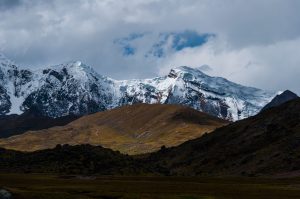
The region is surrounded by stunning Andean mountains, fertile agricultural lands, traditional villages, and some of the most beautiful scenery in the Peruvian highlands.
Their strategic location within the Sacred Valley makes them among the most visited cultural attractions in the Cusco region.
Moray: An Ingenious Center of Inca Agricultural Innovation
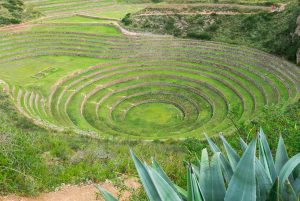
Located in the heart of the Sacred Valley, Moray is one of the most fascinating archaeological sites left behind by the Inca civilization. This remarkable complex is renowned for its series of circular terraces that descend deep into the earth, creating a spectacular landscape unlike any other in Peru.
The design of Moray is unique. Its concentric terraces form large bowl-shaped depressions that generate different temperature zones from the top to the bottom. Historians and archaeologists believe the Incas used this site as an agricultural laboratory, testing the adaptation of crops to various climatic conditions found throughout their vast empire.
Visitors to Moray can admire the incredible engineering skills of the Incas, who carefully designed each terrace to maximize productivity while maintaining stability and efficient water management. The site demonstrates the advanced understanding the Incas had of agriculture, ecology, and environmental adaptation.
Highlights of Moray include:
- Impressive circular terrace formations
- Distinct microclimates within each level
- Advanced irrigation and drainage systems
- Evidence of agricultural experimentation
- Stunning views of the surrounding Andes
- One of the most innovative Inca archaeological sites
Today, Moray stands as a testament to the ingenuity and scientific knowledge of the Inca civilization, offering travelers a unique opportunity to explore an ancient center of agricultural research in the breathtaking landscapes of the Sacred Valley.

Why was Moray so important to the Incas?
The significance of Moray lies in its ability to create distinct microclimates within a relatively small area.
Temperature variations between the upper and lower terraces can differ by several degrees, allowing the Incas to simulate different ecological zones.
This remarkable feature may have enabled them to:
- Test crop adaptation
- Improve agricultural productivity
- Study plant growth patterns
- Develop new farming techniques
- Increase food security across the empire
Many archaeologists consider Moray one of the earliest examples of agricultural experimentation in human history.
The Maras Salt Mines: An Ancient Tradition in the Heart of the Andes
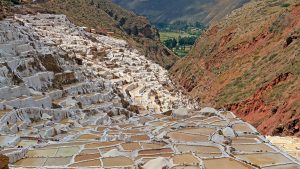
Located in the scenic Sacred Valley, the Maras Salt Mines are among the most fascinating attractions in the Cusco region. This remarkable site features more than 3,000 terraced salt ponds spread across a steep mountainside, creating a stunning patchwork of white and golden hues that contrasts beautifully with the surrounding Andean landscape.
For centuries, local communities have harvested salt here using traditional techniques passed down through generations. The process begins with a natural spring rich in salt minerals that emerges from the mountains and is carefully channeled into individual evaporation pools. As the water evaporates under the Andean sun, layers of high-quality salt are left behind and collected by local families.
The origins of the salt mines date back long before the rise of the Inca Empire, making them an important part of Peru’s cultural heritage. Today, the site continues to support the local economy while offering visitors a unique glimpse into an ancient tradition that remains alive.
A visit to the Maras Salt Mines is not only a visual experience but also an opportunity to learn about the relationship between nature, history, and the communities that have preserved this extraordinary landscape for generations. The combination of breathtaking views and living heritage makes Maras one of the most memorable destinations in the Sacred Valley of the Incas.

Traditional Salt Production in Maras
The production methods used at the Salineras de Maras have remained largely unchanged for centuries.
The process involves:
- Directing mineral-rich water into individual pools
- Allowing natural evaporation through sunlight
- Harvesting salt crystals by hand
- Sorting and processing different salt varieties
This traditional system has supported local communities for generations and continues to represent an important example of sustainable resource management.
Today, Maras produces several types of salt, including gourmet pink salt that is increasingly recognized in international markets.
The Cultural Importance of Maras
Beyond its economic value, Maras represents a living cultural tradition deeply connected to Andean identity.
Local families continue to manage the salt ponds through communal systems that have been passed down through generations.
The site reflects:
- Traditional Andean knowledge
- Community cooperation
- Sustainable production methods
- Cultural continuity
- Respect for natural resources
As a result, Maras serves as both a historical landmark and a living example of Indigenous heritage.
Stunning Landscapes of The Sacred Valley of the Incas