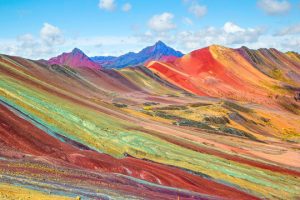

Salkantay Trek 5 Days is widely considered one of the most impressive trekking experiences in Peru and a powerful alternative to the classic Inca Trail. This route offers an extraordinary journey through a wide variety of ecosystems, taking hikers from high-altitude Andean peaks surrounded by glaciers to warm, lush rainforest landscapes as they descend toward the edge of the Amazon.
Along the way, trekkers are treated to a constantly changing scenery that includes snow-covered mountains, crystal-clear lagoons, deep valleys, and traditional Andean villages where local communities continue to live according to ancient customs. One of the most iconic moments of the journey is the view of Mount Salkantay itself, a sacred and towering peak that holds great spiritual significance in the region.
More than just a physical challenge, the Salkantay Trek is an immersive adventure that combines natural beauty, cultural heritage, and the mystique of Inca civilization. Reaching Machu Picchu at the end of the journey makes the experience even more rewarding, leaving travelers with a deep sense of accomplishment and connection to the Andes.


Landscapes Along the Salkantay Trek
One of the most remarkable features of the Salkantay Trek is the incredible diversity of ecosystems and scenery that travelers encounter in only a few days on the trail.
Glacier-covered peaks and alpine scenery
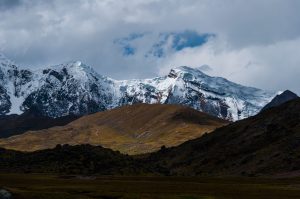
The journey begins in a high-altitude world dominated by towering snow-capped mountains and glaciers. The air is crisp and thin, and the dramatic views of rugged Andean peaks set the tone for the adventure.
Glacial lakes and mountain reflections
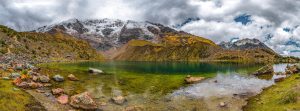
Along the route, trekkers can admire beautiful high-altitude lakes, including the famous Humantay Lake. Its bright turquoise waters, formed by melting glaciers, contrast sharply with the surrounding white peaks and rocky terrain.
Transition into cloud forest
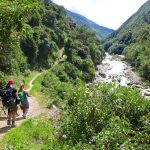
As the trail descends, the environment gradually shifts into a lush cloud forest. This area is filled with dense greenery, orchids, moss-covered trees, and a much warmer, more humid climate compared to the high mountains.
Edge of the Amazon – high jungle zone
In the final stretch, the landscape transforms into the “ceja de selva,” or high jungle. Here, the vegetation becomes more tropical, with vibrant plant life, flowing rivers, and rich biodiversity that reflects the proximity to the Amazon basin.
Salkantay Pass: The Highest and Most Demanding Point of the Trek
The Salkantay Pass is widely recognized as the toughest and highest section of the entire route, sitting at an altitude of over 4,600 meters (approximately 15,000 feet) above sea level. The climb is physically challenging due to the steep ascent and thin air, but it is also one of the most rewarding moments of the journey.
Once at the summit, trekkers are greeted with incredible views that stretch across the Andes, including:
- The majestic Salkantay Glacier
- Vast mountain ranges disappearing into the horizon
- Deep, dramatic valleys carved by time
- Snow-covered peaks surrounding the pass
- Rugged high-altitude landscapes shaped by extreme weather
Many hikers describe this point as both the physical challenge and emotional highlight of the trek, often seen as the symbolic peak of the entire adventure.

Andean culture along the route
The Salkantay Trek passes through remote Quechua communities where ancient traditions are still alive.
Local lifestyles include:
- High-altitude agriculture
- Alpaca and llama herding
- Traditional weaving techniques
- Ritual offerings to the Apus
- Preservation of the Quechua language
These communities maintain a deep spiritual connection with the mountains that surround them.
Biodiversity Along the Salkantay Trek
One of the most remarkable aspects of the Salkantay route is the dramatic change in ecosystems along the way. The trail crosses multiple ecological zones, making it one of the most diverse trekking experiences in Peru.
Wildlife commonly encountered includes:
- Andean condors soaring above the mountains
- Colorful hummingbirds in higher forest edges
- Andean foxes in remote highland areas
- Vizcachas living among rocky slopes
- Rare sightings of the spectacled bear in isolated regions
- A variety of tropical bird species in lower jungle zones
Flora along the route is equally diverse, transitioning from high-altitude vegetation to lush cloud forest and subtropical environments. Hikers may observe:
- Wild orchids growing in humid areas
- Bromeliads attached to trees and rocks
- Dense cloud forest vegetation
- Medicinal plants traditionally used by local communities
- Amazonian plant life appearing as the trail descends
This constant ecological shift gives the impression of traveling through several different worlds within a single trek, making the Salkantay route not only a physical journey but also a natural exploration of Peru’s incredible biodiversity.

Best time to hike the Salkantay Trek
The ideal season for completing the Salkantay Trek is between April and October, which corresponds to the dry season in the Andes.
During these months, weather conditions are generally more stable, with less rainfall and clearer skies. This allows for better mountain visibility and more comfortable trekking conditions overall. Trails are also easier to navigate, making the experience safer and more enjoyable.
From November to March, the region enters the rainy season. While the landscape becomes greener and more vibrant, hikers should expect muddy paths, heavier rainfall, and more unpredictable weather conditions.
Why choose the Salkantay Trek?
The Salkantay Trek is one of the most popular trekking routes in Peru because it offers:
- More diverse landscapes than other routes
- Fewer crowds compared to the Inca Trail
- Stronger connection with nature
- Greater physical challenge
- Direct access to Machu Picchu
- Rich cultural and ecological diversity
It is ideal for travelers seeking adventure, authenticity, and breathtaking scenery.
Connection to the Historic Sanctuary of Machu Picchu
The Salkantay Trek naturally leads to Machu Picchu, one of the most iconic archaeological sites in the world and a UNESCO World Heritage destination often listed among the New Seven Wonders.
Reaching Machu Picchu after several days of hiking through high-altitude glaciers, dramatic mountain landscapes, and lush cloud forest creates a striking contrast. The transition from raw nature to ancient Inca architecture makes the arrival especially meaningful for trekkers.
This blend of challenging natural environments and rich cultural history is what makes the Salkantay route one of the most rewarding trekking experiences in Peru.

Travel recommendations for the Salkantay Trek
Before starting the trek, it is important to:
- Acclimatize in Cusco
- Be in good physical condition
- Wear layered mountain clothing
- Use strong hiking boots
- Stay hydrated throughout the trek
- Apply high-SPF sunscreen
- Travel with experienced guides
Proper preparation ensures a safe and unforgettable experience.
Salkantay Trek 5 Days: A Premier Hiking Adventure in the Peruvian Andes
The 5-day Salkantay Trek is one of the most remarkable trekking routes in Peru, offering travelers an unforgettable journey through diverse Andean ecosystems. More than just an alternative path to Machu Picchu, it is a full immersion into nature, culture, and high-altitude adventure.
Along the way, hikers experience breathtaking contrasts—from the majestic snow-covered peak of Salkantay Mountain to crystal-clear glacial lakes, dramatic mountain passes, and the vibrant transition into the Amazonian cloud forest. Each day reveals a new landscape, making the journey as rewarding as the destination itself.
The route also provides a unique opportunity to connect with local traditions and remote Andean communities, where ancient customs and mountain spirituality remain an essential part of daily life.
Ending at the iconic Machu Picchu, the Salkantay Trek 5 days delivers not only physical challenge but also emotional and cultural enrichment. It stands as one of the most complete and unforgettable trekking experiences in South America, ideal for travelers seeking adventure, authenticity, and a deep connection with the natural world.